
A pet can make a house feel like home, right up until the living room starts smelling faintly like yesterday’s wet dog or a hidden litter-box accident. Learning how to remove pet odors is less about covering them with a strong fragrance and more about finding where the odor settled, then cleaning the source completely.
That matters in busy homes across Atlantic and Cape May Counties, where sandy paws, rainy walks, humid summer days, and upholstered furniture can all make odors linger longer. The good news is that most pet smells can be managed with a practical routine and the right kind of cleaner.
Pet odors are often stubborn because they do not stay on the surface. Urine can soak through carpet fibers into the backing and padding. Oils from a dog’s coat transfer to blankets, sofas, bedding, and walls near favorite nap spots. Litter dust and tracked debris settle in nearby floors and corners.
A scented spray may make the room smell better for an hour, but it does not remove the material causing the odor. Heat and humidity can then bring that smell right back. If a room smells clean after cleaning but turns unpleasant again on a warm afternoon, there is probably residue below the surface.
The best approach depends on the source. A recent puppy accident needs a different response than a months-old odor in a carpeted guest room or a vacation rental sofa used by several pets.
Start by locating the affected area before reaching for any product. Your nose can usually point you in the right direction, especially when the room is closed for a few hours. For older urine spots, a UV flashlight can help reveal dried stains that are otherwise hard to see.
For a fresh urine accident on carpet, press clean white towels firmly into the spot to absorb as much liquid as possible. Do not scrub. Scrubbing pushes moisture deeper into the carpet and spreads it into a larger area.
Once the area is blotted, apply an enzyme-based pet cleaner according to its directions. Enzymes are designed to break down the organic matter behind urine odors rather than simply perfume the area. Give the product enough dwell time to work, then blot again and allow the area to dry fully.
Avoid steam cleaning a urine spot before it has been treated. Heat can set the odor and stain, making complete removal more difficult. Also skip ammonia-based cleaners. Their smell can resemble urine to pets and may encourage repeat marking.
Old odors may be in the carpet backing or pad, even when the top fibers look clean. Apply an enzyme cleaner generously enough to reach as deeply as the original accident likely did. This is where homeowners sometimes underapply the product, cleaning only the visible surface while the odor remains underneath.
After treatment, keep people and pets off the area while it dries. Open windows when weather permits, run ceiling fans, or use a fan nearby to speed drying. If the smell persists after one or two careful treatments, the pad may need professional attention or replacement. It depends on the amount of saturation, how long it sat, and the type of flooring underneath.
Pet beds, throw blankets, slipcovers, and washable cushion covers hold onto body oils and dander. Wash them regularly using the warmest water allowed by the care label and a pet-safe laundry detergent. Adding a second rinse cycle can help remove lingering detergent and odor residue.
For upholstery that cannot go in the washer, vacuum first using an upholstery attachment. Then spot-test an enzyme cleaner in an inconspicuous area before treating the affected section. Use enough product to reach the odor, but do not soak foam cushions. Too much moisture can lead to mildew or leave water rings.
If a sofa has absorbed repeated accidents or heavy pet odor over years, surface cleaning may not be enough. A deep upholstery or carpet-cleaning service can be the more sensible option, particularly before guests arrive, a lease ends, or a rental property goes back into rotation.
A room can still smell like a pet after the carpet is cleaned because odor is often spread by paws, fur, and airflow. Focus on the areas surrounding your pet’s favorite spots.
Wash hard floors with a cleaner that is appropriate for the material, whether tile, sealed vinyl, laminate, or finished wood. Too much water can damage some flooring, so use a damp mop rather than soaking the surface. Wipe baseboards, lower walls, crate surfaces, and the outside of the litter box, where oils and splashes can collect.
Vacuum rugs, carpet edges, furniture, and under cushions thoroughly. A vacuum with a clean filter is more effective than one that is already full of pet hair and dust. Do not forget curtains, fabric headboards, and the back seat of the car if your pet rides along often.
For litter-box odors, scoop daily and wash the box regularly with mild soap and warm water. Replace damaged plastic boxes when scratches become deep, since odor-causing residue can cling inside them. Keep the box in a well-ventilated area when possible, but avoid placing it directly beside a return air vent that can distribute odor through the home.
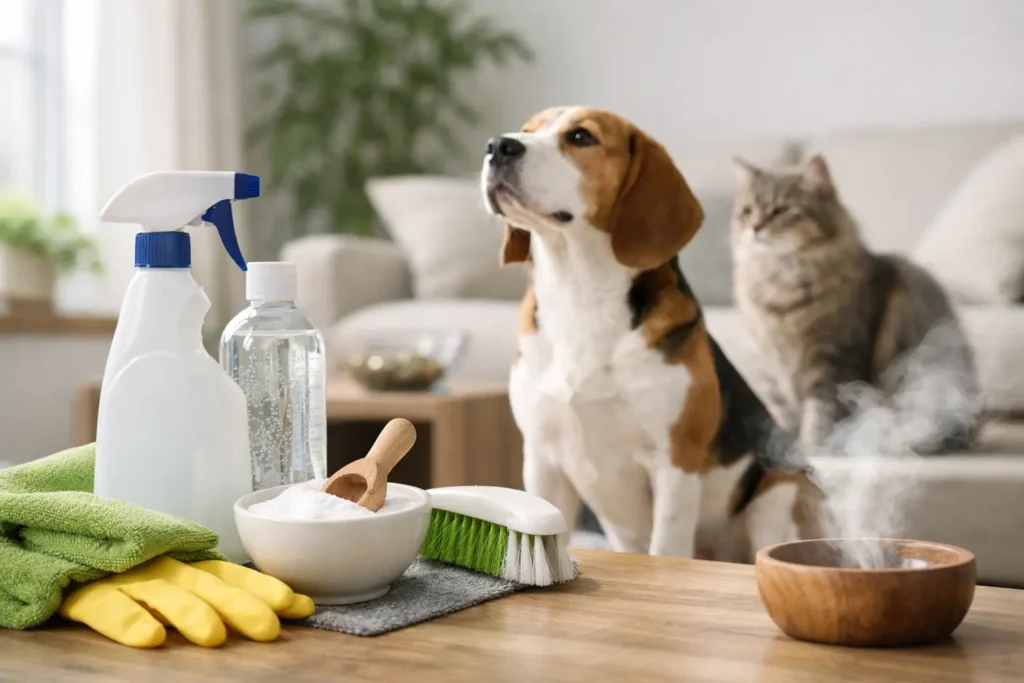
Baking soda can be helpful on dry carpet or fabric after the source has been cleaned. Sprinkle lightly, leave it for several hours, and vacuum thoroughly. It can absorb some remaining odor, but it is not a substitute for enzyme treatment when urine is involved.
Be cautious with essential oils, heavily fragranced sprays, and plug-in deodorizers. Some scents can be irritating to pets, and strong fragrances can make a clean room feel less fresh, not more. The goal is a neutral, comfortable home, not a room that smells like it is trying too hard.
Air purifiers with a true HEPA filter and activated carbon can help reduce airborne dander and everyday pet smell, especially in smaller bedrooms or living areas. They are a helpful support tool, but they cannot remove odor trapped in a stained carpet or cushion.
The easiest way to maintain a fresh home is to make odor control part of the regular cleaning rhythm. Wash pet bedding weekly or as needed, vacuum high-traffic areas often, and groom pets on a schedule that suits their coat and skin needs. Wiping paws after wet walks also keeps damp, outdoor smells from traveling through the house.
For homes with multiple pets, senior pets, or a pet still being house-trained, consider using washable throws on favorite furniture. They are much easier to launder than an entire sofa. Place waterproof liners beneath pet beds if accidents are a concern, and address repeat spots quickly so they do not become permanent problem areas.
Short-term rental hosts have an extra reason to stay ahead of pet odors. Guests notice a lingering smell the moment they open the door, even if the property otherwise looks spotless. A consistent turnover routine should include checking soft furnishings, rugs, entryways, trash areas, and outdoor pet stations, not just changing linens and wiping visible surfaces.
Call for professional help when odors return after careful treatment, when stains cover a large area, or when you are preparing a home for move-out, move-in, or guests. Deep carpet cleaning can remove embedded soil, hair, and residue that routine vacuuming cannot reach. For severe urine saturation, a cleaning professional can help assess whether the carpet, pad, or subfloor needs additional work.
MopFrog Atlantic City can help homeowners, renters, and rental hosts build a cleaning plan around real life, whether that means a one-time carpet refresh or recurring cleaning that keeps pet hair and everyday odors from getting ahead of you.
Your pet does not have to be spotless for your home to feel fresh. A quick response to accidents, clean fabrics, and regular attention to the places pets actually use will make your space more comfortable for everyone who walks through the door.

Ut elit tellus, luctus nec ullamcorper mattis, pulvina.