

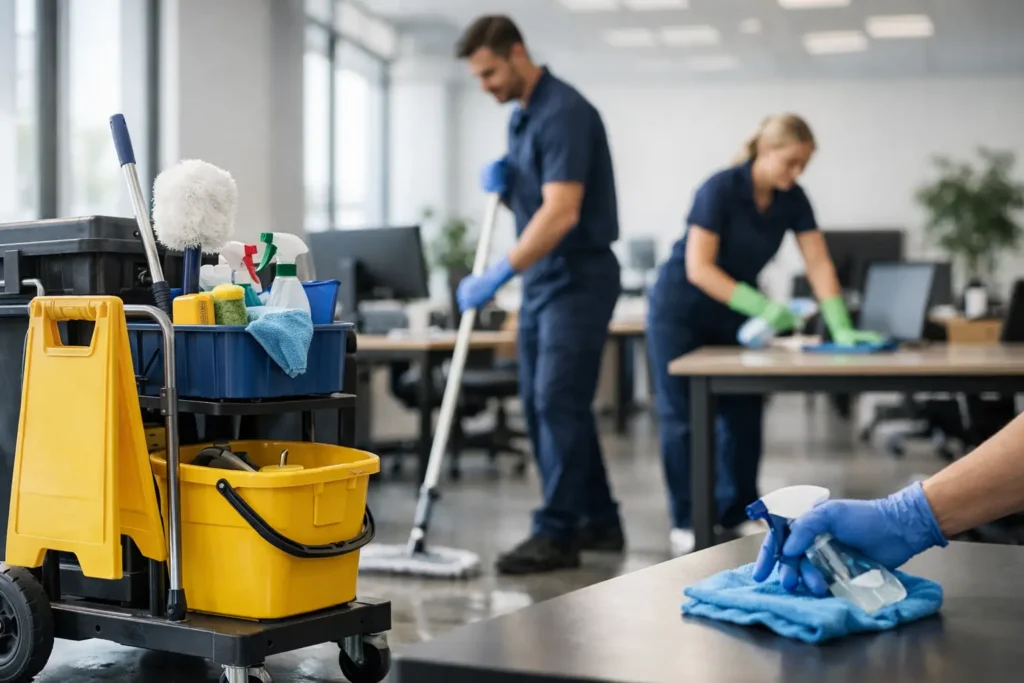
A clean business is not just about making a good first impression. It affects how employees feel at work, how customers judge your standards, and how easily your team can get through the day. This commercial cleaning frequency guide helps Atlantic and Cape May County businesses choose a schedule that fits their space, traffic, and budget without paying for services they do not need.
The right answer is rarely “once a week” for every task. A quiet professional office has very different needs than a busy restaurant lobby, medical waiting room, retail shop, or shared workspace. The goal is simple: keep high-touch, high-visibility, and high-risk areas consistently clean while scheduling deeper work before dirt becomes a bigger job.
Cleaning frequency should follow activity, not just square footage. A small office with 10 employees may need more attention than a larger facility with only a few people on site. Think about who enters the building, what they do there, and what they notice first.
Foot traffic is usually the biggest factor. Entrances, hallways, restrooms, break rooms, reception counters, and shared desks collect dirt and germs faster than private offices. Weather matters, too. Rainy weeks, winter salt, beach sand, and summer humidity can all make South Jersey floors and entryways look worn down sooner.
Your business type also changes the schedule. Customer-facing locations need a polished appearance throughout operating hours. Facilities with food, healthcare-related services, children, pets, or frequent public use need more frequent sanitizing. Offices with mostly remote staff may be able to scale back routine visits and reserve deeper cleaning for busier days.
A dependable plan separates daily upkeep from weekly detail work and periodic deep cleaning. That keeps the space looking cared for every day while protecting carpets, floors, fixtures, and high-use surfaces over time.
For most active commercial spaces, restrooms should be cleaned and restocked daily. This includes disinfecting toilets, sinks, handles, counters, and other touchpoints; emptying trash; and checking soap, paper towels, and toilet paper. In a high-traffic public restroom, service may be needed more than once per day.
Entrances and common areas also benefit from daily care. Vacuuming or sweeping, spot-mopping spills, removing trash, and cleaning glass doors help prevent a messy first impression. If customers walk in with wet shoes, sand, or salt on their feet, floor care may need to happen during the day rather than after closing.
High-touch surfaces should be disinfected daily in shared environments. Door handles, elevator buttons, light switches, shared equipment, reception counters, break room tables, and communal keyboards are easy to overlook until employees start noticing grime. Daily attention is especially worthwhile during cold and flu season or when a business sees steady visitor traffic.
Weekly cleaning is where a workspace gets the more complete refresh people can see and feel. This commonly includes thorough vacuuming, mopping hard floors, dusting desks and ledges, wiping baseboards in visible areas, cleaning interior glass, and taking care of break rooms beyond a quick daily wipe-down.
For many offices, a professional cleaning visit once or twice a week is a practical starting point. A small office with limited guests may be comfortable with weekly service plus simple employee upkeep between visits. A busier office, showroom, or retail location may need two to five visits per week to stay consistently presentable.
Weekly service is also a good time to clean microwaves, refrigerator exteriors, cabinet fronts, and other break room surfaces that collect fingerprints and food residue. These details may not cause an immediate problem, but they influence whether a workplace feels cared for.
Some jobs do not need daily attention, but they should not be left until they become obvious. Monthly or quarterly deep cleaning can include detailed dusting of vents and blinds, cleaning behind accessible furniture, polishing fixtures, washing interior windows, and treating buildup in grout or around restroom fixtures.
Carpet cleaning frequency depends on use. A low-traffic office may only need professional carpet cleaning once or twice a year. A lobby, rental office, retail space, or facility with heavy foot traffic may benefit from quarterly cleaning or spot treatment as needed. Regular carpet care helps preserve fibers, reduce lingering odors, and keep walkways from looking permanently dull.
Hard floors deserve the same planning. Routine mopping handles surface dirt, but periodic machine scrubbing, buffing, or refinishing may be needed to maintain a professional appearance. The exact timing depends on the flooring material, amount of traffic, and whether people track in moisture, sand, or road salt.
A professional office with predictable weekday traffic often does well with one to three cleaning visits each week, plus daily restroom checks if employees or visitors use them heavily. Reception areas and conference rooms may need extra attention before client meetings or busy appointment days.
Retail stores, salons, fitness spaces, and customer-facing businesses typically need daily cleaning. Customers notice dust on shelves, streaks on glass, overflowing trash, and dirty floors right away. These spaces may also need midday touch-ups, especially around entrances, fitting rooms, checkout counters, or restrooms.
Medical-adjacent offices, childcare environments, and businesses where people wait in close quarters should prioritize frequent disinfection of touchpoints and restrooms. A cleaning schedule supports a healthier environment, but it should also align with any industry-specific sanitation requirements your business follows.
Property management offices and shared buildings have another layer to consider: common areas. Hallways, elevators, lobbies, laundry rooms, and community restrooms represent the property every day. A regular schedule protects the experience for tenants and guests while reducing the chance that a small mess turns into a complaint.
If your team is spending time cleaning instead of doing their actual jobs, the schedule may not be carrying enough of the load. The same is true if employees avoid the break room, customers mention the restroom, or the lobby only looks good right after someone rushes to clean it.
Other warning signs are more gradual. Carpet paths look darker, glass stays streaky, corners collect dust, and supplies run out before the next service. These are not always signs of poor cleaning. Often, they simply mean the frequency no longer matches the way the building is being used.
Seasonal changes can also call for a temporary adjustment. A business may need extra floor care during wet weather, more frequent restroom service during a busy summer season, or a deeper cleaning before reopening after renovations or a major event. Flexible scheduling is often more useful than locking into the same plan all year.
The lowest-cost schedule is not always the best value if it leaves employees handling spills, trash, and restrooms between visits. On the other hand, daily full-service cleaning may be unnecessary for a lightly used office. A smart plan puts the budget toward the areas people use and notice most.
Start by identifying your non-negotiables: restroom care, trash removal, floors, break room cleaning, and high-touch disinfection. Then decide which visible details should happen weekly and which deeper tasks can rotate monthly or quarterly. This approach gives you a clear baseline without treating every room as if it has the same needs.
It also helps to choose a cleaning partner that can adjust with your business. MopFrog Atlantic City builds service plans around each facility’s traffic, priorities, and preferred schedule, whether that means daily attention, weekly visits, or periodic deep cleaning.
A workplace should feel ready before the first employee or customer walks through the door. When your cleaning frequency matches real activity in the space, you get a fresher environment, fewer last-minute scrambles, and one less operational detail to manage.

Ut elit tellus, luctus nec ullamcorper mattis, pulvina.