

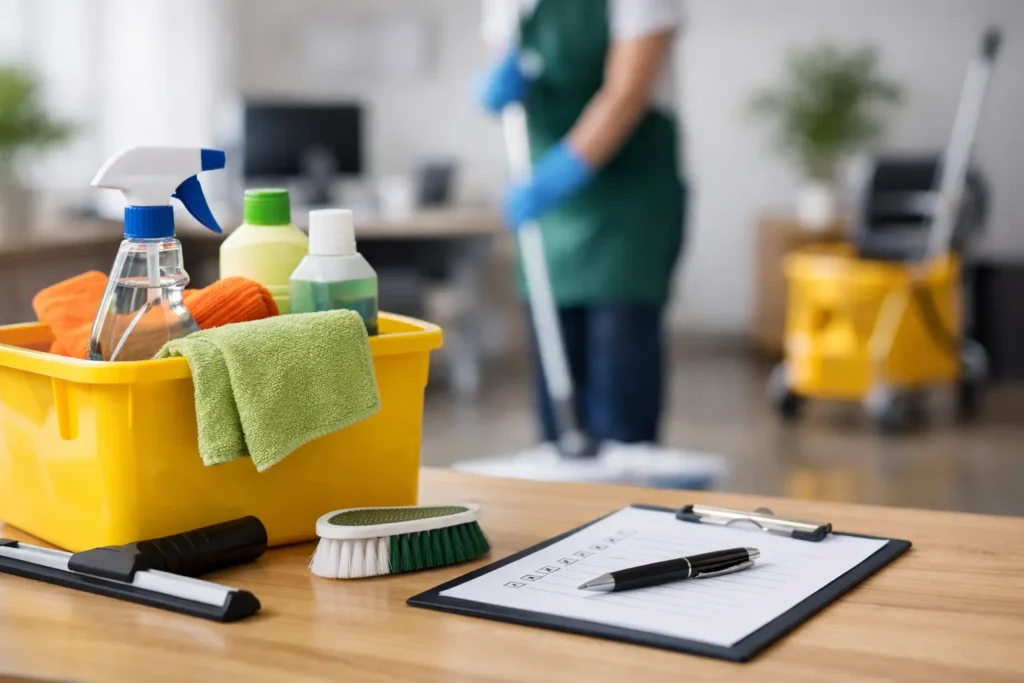
The first thing a customer notices may be the glass on your front door, the smell in the restroom, or the crumbs under a waiting-area chair. A reliable small business janitorial checklist keeps those small details from becoming daily distractions. More than a cleaning to-do list, it gives your team or cleaning provider a clear standard for a space that feels cared for from opening time to closing time.
For local offices, retail spaces, professional practices, and customer-facing businesses across Atlantic and Cape May Counties, the right schedule depends on foot traffic, restroom use, food service, pets, weather, and the kind of impression your business needs to make. A quiet office with six employees has different needs than a busy storefront near the shore in summer. The goal is not to clean everything constantly. It is to clean the right things at the right frequency.
A checklist works best when it follows how people move through your building. Divide the space into zones, assign a frequency to each task, and make sure everyone knows who handles supply restocking, special spills, and after-hours concerns. That simple structure saves time and makes missed details much easier to spot.
Your entrance does a lot of work before anyone says hello. Each day, remove litter from sidewalks and entry mats, wipe fingerprints from glass doors and handles, and check that floors are dry and free of tracked-in dirt. In rainy or snowy weather, those checks may be needed more than once a day. Wet floors are not just unattractive – they can create a safety issue.
Inside, empty visible trash, straighten chairs or displays, dust counters, and disinfect high-touch surfaces such as reception counters, card terminals, pens, door handles, and light switches. Spot-clean glass, mirrors, and wall marks as needed. A full floor cleaning may happen after closing, but quick attention during business hours keeps the space welcoming.
If your business has a waiting room, look closely at the details customers sit near: chair arms, side tables, magazines, outlets, and baseboards. These areas do not always need a deep clean every day, but they should never look neglected.
Desks are personal work areas, so establish boundaries before cleaning them. Staff may prefer that cleaners empty trash and wipe shared surfaces while leaving papers, electronics, and personal items in place. A good janitorial plan respects privacy without allowing clutter and dust to build up.
Daily office tasks usually include emptying trash and recycling, wiping common tables, disinfecting shared equipment, and vacuuming or sweeping high-traffic paths. Weekly work can include dusting ledges, vents, blinds, and furniture; cleaning interior glass; and vacuuming beneath chairs where practical.
Shared spaces need more attention than private desks. Conference rooms, printer stations, break tables, and shared keyboards collect fingerprints quickly. If employees rotate through these spaces all day, a midday wipe-down can make a noticeable difference.
Restrooms are where customers and employees form some of their strongest opinions about a business. They should be checked daily at minimum and more often in high-traffic locations. Empty trash, clean and disinfect toilets, urinals, sinks, faucets, counters, handles, and dispensers. Mop floors with attention to corners and around toilet bases.
Restock toilet paper, hand soap, paper towels, and feminine hygiene supplies if your business provides them. Do not wait for a dispenser to run empty. A quick supply check during each visit is one of the easiest ways to prevent an awkward customer experience.
Weekly restroom tasks should include polishing fixtures, cleaning partitions and wall splashes, dusting vents, and addressing buildup around drains. If there is persistent odor, the answer may be more than fragrance. It could point to a drain issue, damp mop heads, overflowing trash, or a spot that is not being cleaned thoroughly enough.
Break rooms can become messy fast because everyone assumes someone else will handle them. Your checklist should cover daily wiping and disinfecting of tables, counters, sink fixtures, appliance handles, and coffee stations. Remove food-related trash, replace liners, sweep the floor, and check for spills around refrigerators and microwaves.
At least weekly, clean the microwave interior, wipe refrigerator shelves and handles, clean cabinet fronts, and mop thoroughly. A monthly reset is helpful for checking expired food, wiping inside cabinets, and pulling movable equipment away from walls where crumbs and dust collect.
If employees prepare food on site, use products appropriate for food-contact surfaces and follow label directions. Eco-conscious products can be a great choice, but they still need enough contact time to work properly. Fast spraying and immediate wiping may look productive while leaving surfaces less clean than they should be.
The biggest mistake in a janitorial checklist is treating every task as daily. That can waste budget and attention. On the other hand, waiting too long between cleanings can lead to odors, stained floors, dust buildup, and a harder, more expensive deep clean later.
Use three simple timeframes. Daily tasks protect health, safety, and first impressions. Weekly tasks prevent buildup in areas that get regular use but do not need constant attention. Monthly or periodic tasks handle the details that preserve your facility over time, such as high dusting, baseboard cleaning, interior windows, upholstery care, and deep floor maintenance.
Your schedule may need to change with the season. Shore-area businesses often see more sand, moisture, and foot traffic during peak visitor months. A retail shop may need nightly floor care in summer but only a few service visits each week in the off-season. An office may need extra attention during cold and flu season, especially on shared touchpoints.
Keep these daily priorities visible for your staff or cleaning crew:
This is the foundation. Once these basics are handled consistently, the rest of the checklist becomes far more manageable.
Weekly cleaning is where a business begins to look professionally maintained rather than simply picked up. Vacuum upholstery, clean interior glass, dust surfaces beyond eye level, wipe chair legs, sanitize waste bins, and clean around furniture. Give hard floors a more thorough mop or machine cleaning based on the surface and traffic level.
Monthly work often includes high dusting vents and ceiling corners, wiping baseboards, cleaning behind movable furniture, treating carpet spots, and checking walls for scuffs. Carpet cleaning should be scheduled based on traffic and soil, not just the calendar. A small office with low traffic may only need periodic professional service, while a lobby with wet weather and constant foot traffic may benefit from more frequent attention.
Do not forget the outside edge of your business. Trash areas, exterior doors, entry mats, and sidewalks affect the experience before people come inside. If your staff handles these tasks, make ownership clear. If a janitorial provider handles them, include the scope in writing so there is no guesswork.
A checklist only helps if people actually use it. Keep it specific enough to be accountable but simple enough to complete during a real work shift. Instead of writing “clean restroom,” list the expected result: disinfect toilet and sink fixtures, wipe mirrors, restock supplies, empty trash, and mop floor.
It also helps to keep a short issue log. Note burned-out lights, leaks, damaged dispensers, carpet stains, supply shortages, or recurring odors. Cleaning teams often spot these problems first, and early reporting can prevent a small maintenance need from turning into a disruption.
For businesses that want dependable recurring service without adding another job to a manager’s day, MopFrog Atlantic City can tailor cleaning around your hours, traffic, and facility needs. Whether service is daily, weekly, or monthly, clear expectations and courteous follow-through make the difference.
A clean business should feel effortless to the people walking through it. Put this checklist where it can be used, adjust it when your busy season changes, and let your customers notice the care without ever having to think about why.

Ut elit tellus, luctus nec ullamcorper mattis, pulvina.