

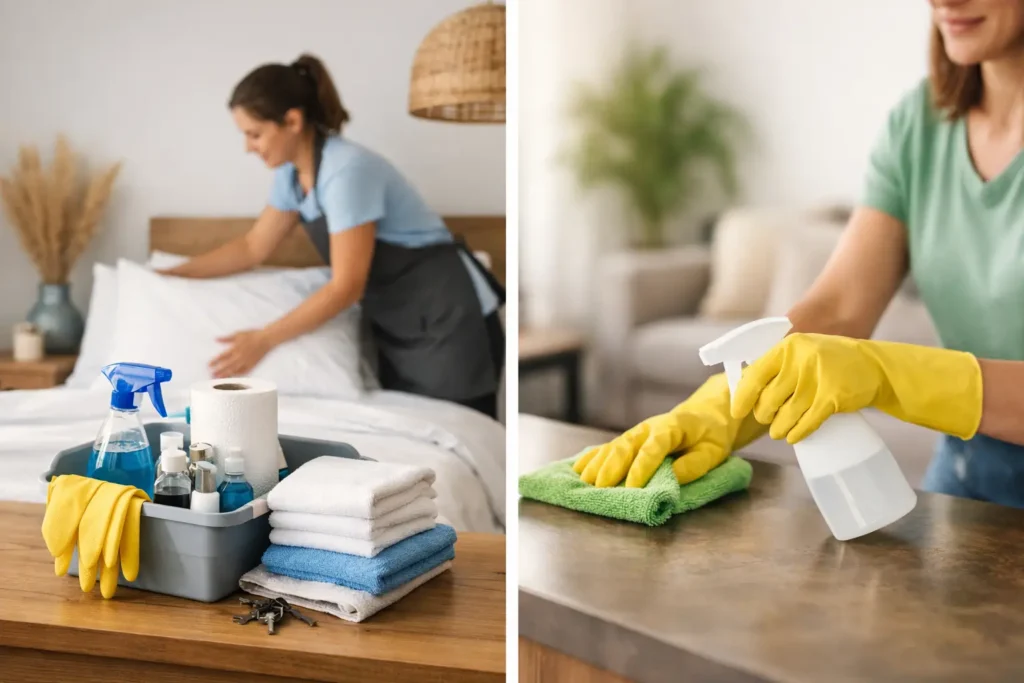
A guest checks out at 10 a.m., the next reservation arrives at 4 p.m., and every minute in between matters. That is why Airbnb turnover versus standard cleaning is more than a difference in cleaning style. For short-term rental hosts in Atlantic and Cape May Counties, it is the difference between a property that is merely clean and one that is ready to earn another five-star review.
A standard cleaning keeps a home comfortable over time. An Airbnb turnover prepares a property for a brand-new guest, on a fixed deadline, with no room for overlooked details. Both services are valuable, but they solve very different problems.
Standard cleaning is built around maintenance. It helps homeowners, renters, and recurring commercial clients stay ahead of dust, bathroom buildup, kitchen messes, pet hair, and the everyday signs of a busy life. The goal is a cleaner, more comfortable space without asking the customer to spend their free time catching up on chores.
In a typical home, standard cleaning may include wiping accessible surfaces, vacuuming and mopping floors, cleaning bathrooms, refreshing the kitchen, taking out trash, and dusting common areas. The exact scope depends on the home, its condition, and the schedule. A weekly client may need a lighter reset than a household that books monthly service.
The cleaner is working with the same household and the same living routines. A few family photos on the counter, a child’s homework on the table, or a dog’s bed in the corner are normal parts of the space. The work is focused on sanitation, appearance, and ongoing upkeep while respecting the way the household lives.
That makes standard cleaning a smart fit when consistency matters more than a same-day guest-ready reset. It is practical, flexible, and especially helpful for busy families, older adults, pet owners, and anyone who wants to come home to a fresh space without adding another task to their schedule.
An Airbnb turnover has a hospitality standard layered on top of cleaning. The rental must look, feel, and function as though no one has stayed there before. It must also be ready by check-in, often within a short window between departing and arriving guests.
A turnover cleaning starts with a full reset. Used linens and towels are removed and replaced, beds are made neatly, bathrooms are restocked and checked, kitchen items are inspected, trash is cleared, and floors are cleaned throughout the property. The work also includes looking for guest-left items, damage, excessive messes, or maintenance concerns that could affect the next stay.
That inspection piece is a major difference. In a standard home cleaning, a cleaner may notice that a cabinet handle is loose and mention it. In a vacation rental, noticing it early can prevent a guest complaint, a late-night text, or a poor review. The same is true for missing remote controls, a low supply of toilet paper, a stained comforter, or sand tracked in from the shore.
A turnover is not automatically a deep cleaning. If a guest leaves a rental in reasonable condition, the service is a detailed reset completed efficiently. But if the property has heavy buildup, stained carpets, excessive trash, or damage, the host may need extra service time or a separate deep-cleaning plan. Clear communication helps avoid surprises when the checkout condition is not typical.
Standard cleaning appointments can often be scheduled around the customer’s routine. If the cleaner arrives on Tuesday morning instead of Wednesday afternoon, that may be manageable. With an Airbnb turnover, timing is part of the service itself.
Hosts need a team that can work within the checkout-to-check-in window, communicate quickly, and follow the same process every time. A beautiful cleaning completed after the next guest has arrived is not useful. Reliable scheduling protects the guest experience and reduces the stress that comes with managing reservations from work, from another town, or from a packed summer calendar.
This is especially relevant near Atlantic City and the shore communities, where weekend bookings, special events, and seasonal travel can create fast back-to-back turnovers. The property may need attention on a Saturday afternoon, a holiday weekend, or during a period when every available booking matters. A cleaning partner should understand that a missed detail or delayed arrival can affect the host’s whole operation.
Guests do not see the work that happened before they arrived. They see the result in the first few minutes: a clean entry, fresh-smelling rooms, spotless bathrooms, neat beds, and a kitchen that feels ready to use. Those details shape whether they settle in confidently or start looking for problems.
A standard cleaning can be excellent without staging a home for someone unfamiliar with it. A turnover must account for first impressions. Toilet paper should be easy to find. Towels should be folded and placed where guests expect them. Counters should be clear. The coffee area, refrigerator, shower, and floors need a careful once-over because guests will use them right away.
This does not mean every rental needs hotel-level extras. The right standard depends on the property, nightly rate, guest profile, and host’s amenities. A simple beach condo and a larger family vacation home may have different needs. What should not change is the host’s commitment to a clean, welcoming, dependable arrival experience.
A consistent turnover process helps protect a host’s reviews, calendar, and property. Guests are more likely to mention cleanliness when it falls short than when it simply meets expectations. One overlooked shower, sticky kitchen floor, or missing towel can distract from everything else a host has done well.
Regular turnovers also create a useful set of eyes on the property. A trained cleaning team can flag a broken lamp, an empty propane tank, a damaged blind, or a forgotten personal item before the next guest discovers it. That does not replace property management or maintenance, but it gives hosts timely information when it matters most.
For rentals with carpet, area rugs, pets, or frequent sandy foot traffic, periodic professional carpet cleaning can also support the turnover routine. Daily appearances can be maintained between stays, while deeper cleaning handles odors, embedded dirt, and stains that ordinary vacuuming cannot fully remove.
If you live in the property and want dependable help maintaining it, standard recurring cleaning is usually the right choice. You can set a daily, weekly, or monthly schedule around your household’s needs and keep the space feeling consistently cared for.
If guests are checking in and out, choose a turnover service that is built around reservation timing, fresh linens, restocking, inspection, and presentation. It may cost more than a basic maintenance clean because the work carries greater urgency and responsibility. For most hosts, that added structure is worth it when it helps prevent rushed turnovers and protects guest confidence.
Some property owners need both. A homeowner may book recurring cleaning for their primary residence and turnover cleaning for a shore rental. A host with a longer vacancy may schedule a deeper clean before the busy season, then use turnover service between reservations. The best plan is the one that matches how the property is actually used.
MopFrog Atlantic City helps local hosts create cleaning schedules that fit real booking calendars, not one-size-fits-all assumptions. When the cleaning team understands your property and your expectations, you can spend less time chasing details and more time keeping an eye on those five-star reviews.
A clean rental is not just a finished chore. It is the first welcome your next guest receives, and a dependable turnover gives that welcome the attention it deserves.

Ut elit tellus, luctus nec ullamcorper mattis, pulvina.