
A pet accident rarely happens at a convenient time. It happens five minutes before company arrives, during a busy workday, or just after you thought house-training was finally behind you. Effective carpet cleaning for pet stains is about more than making a spot look better. It means removing what has soaked below the surface so your home feels clean, smells fresh, and stays comfortable for everyone who lives there.
For households across Atlantic and Cape May Counties, the challenge can be bigger than it first appears. Humid shore weather, sandy paws, repeat accidents, and light-colored carpeting can turn one small incident into a stubborn problem. The good news is that most pet stains can be improved with prompt care and the right cleaning approach.
A pet stain has two parts: the visible mark and the residue you cannot see. Urine can travel through carpet fibers into the backing and padding beneath. If only the top layer is treated, odor-causing residue may remain below, especially when the area becomes warm or humid.
That lingering scent matters to pets, too. A dog or cat may return to the same spot because it still smells like a familiar bathroom area, even when the carpet looks clean to people. This is why covering an odor with fragrance rarely solves the problem. The source needs to be treated.
Older stains are often more complicated. As urine dries, it can leave behind crystals that reactivate with moisture. A rainy week, a wet bathing suit dropped nearby, or routine steam from daily life can make an old odor suddenly noticeable again. It does not always mean the stain is new. It may mean the residue was never fully removed.
The first few minutes make a real difference. Blot fresh accidents with clean white towels or paper towels, pressing firmly to absorb as much moisture as possible. Stand on the towels if needed, replacing them until they come up mostly dry. This simple step helps keep liquid from spreading deeper into the carpet.
Avoid rubbing or scrubbing. Scrubbing can push the stain outward, rough up carpet fibers, and make the affected area look worn after it dries. It can also drive moisture further into the padding.
If you use a pet-safe spot cleaner, test it first in a hidden area. Apply it according to the label, give it the recommended dwell time, then blot rather than rub. Too much product can create its own problem by leaving a sticky residue that attracts dirt. A little patience is usually more helpful than adding cleaner again and again.
Do not use heat on a fresh stain. Hot water and high heat can set protein-based messes, including vomit or feces, into some carpet fibers. For solid messes, carefully lift away as much material as possible before treating the remaining spot. Keep the work area ventilated and allow it to dry completely.
Not every pet stain responds to the same method. Urine usually calls for an enzymatic treatment designed to break down odor-causing organic residue. Vomit and feces may involve proteins, dyes, oils, or bacteria, so they often require careful pre-treatment and extraction. Muddy paw prints are different again, especially around the Jersey Shore, where sand can settle deep into carpet and act like grit against the fibers.
Color also matters. A yellow urine stain on pale carpet may need more than odor treatment. A dark stain from an upset stomach can leave behind pigments even after the area has been sanitized. In those cases, a professional can assess the fiber type, stain age, and previous products used before choosing a cleaning solution.
That last detail is worth mentioning. Mixing household cleaners can cause discoloration or leave chemical residue behind. Bleach, ammonia, and strong oxidizers are especially risky on carpet. Ammonia may also smell similar to urine to some pets, which is not what you want in an area where accidents have happened.
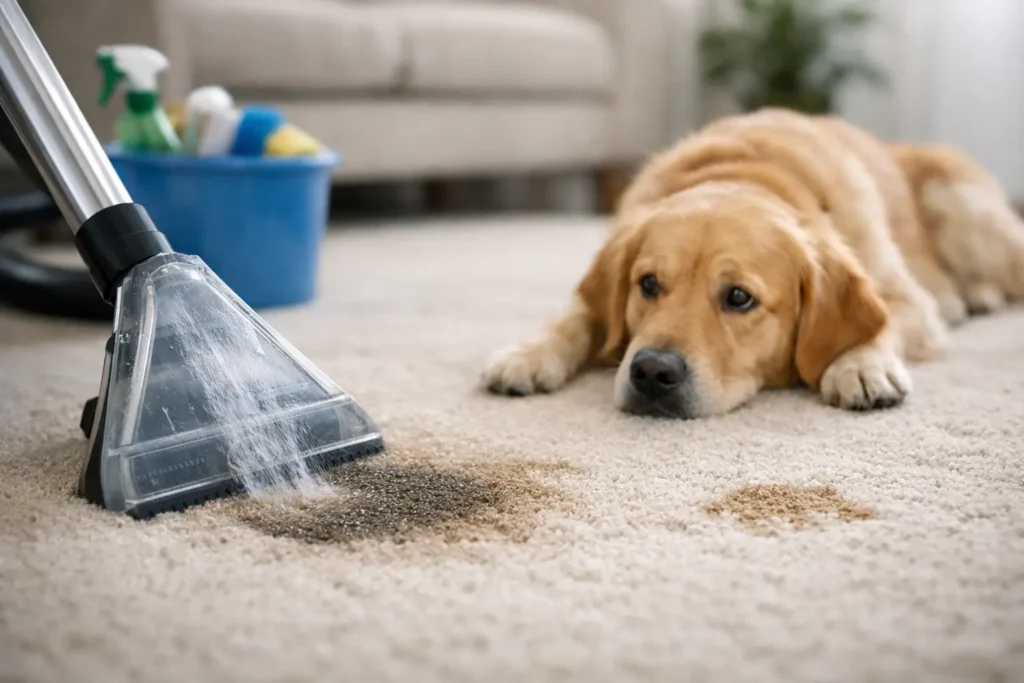
A small, fresh accident on a washable rug may be manageable at home. A repeated spot near the sofa, an odor that returns after cleaning, or a stain that has reached the padding is a different situation. Professional carpet cleaning for pet stains uses extraction methods that remove moisture and residue rather than simply spreading cleaner across the surface.
Professional help is especially useful when you are moving into a home, preparing a rental between guests, or getting ready to list a property. You may not know how long a prior stain has been there or which products were used on it. A thorough inspection can reveal odor concerns that are easy to miss during a quick walk-through but obvious to a guest settling in for the weekend.
For vacation-rental hosts, pet odors can affect more than one room. Guests notice them when they walk through the door, sit on the floor with children, or place luggage near a bedroom rug. Fresh, well-maintained carpet supports the clean first impression that helps protect five-star reviews.
MopFrog Atlantic City provides professional carpet cleaning with the same practical attention given to homes, rentals, and local workspaces. The goal is simple: address the stain, reduce the odor, and help your carpet look and feel ready for real life again.
The process starts with understanding the problem. A technician may ask where accidents occurred, how long ago they happened, whether the pet has returned to the same areas, and what you have already tried. That information helps avoid using a treatment that clashes with residue from an earlier product.
Next comes targeted pre-treatment. Rather than treating every stain as identical, the cleaning solution should match the type of soil and the carpet’s condition. The area is then cleaned with professional extraction equipment to lift dissolved soil, cleaning solution, and moisture from the fibers.
Deep contamination may require additional odor treatment. When residue has reached backing or padding, surface cleaning alone may not be enough. The best approach depends on the extent of the issue, the carpet material, and whether the odor is isolated or widespread. In severe cases, padding replacement may be more practical than repeated surface treatments. A dependable provider should be honest about that trade-off.
Drying is part of the result, not an afterthought. Proper airflow helps carpets dry faster and discourages lingering dampness. Keep pets and foot traffic away from cleaned areas until they are dry, then vacuum once the carpet has fully settled if recommended.
No cleaning plan can prevent every accident, but a few routines can make cleanup easier. Keep clean absorbent towels and a pet-safe spot treatment in an accessible place, not buried under the kitchen sink. If your pet has a favorite accident area, consider limiting access temporarily while you work on retraining and odor removal.
Regular vacuuming also helps. Pet hair, dander, sand, and everyday dust can hold onto odors and make carpet look dull faster. Entry mats near doors are useful for rainy-day walks and beach trips, while washable throws can protect favorite spots on upholstered furniture.
If accidents are happening more often, do not assume it is only a training issue. Changes in routine, stress, mobility, or health can affect pets of every age. A conversation with your veterinarian may help identify the reason and prevent a cleaning problem from becoming a bigger concern.
A clean carpet should feel like a relief when you walk into the room, not a problem you keep trying to hide. Whether you are caring for a busy family home in Galloway, turning over a rental in Atlantic City, or refreshing a property in Cape May County, treating pet stains thoroughly gives the space a genuine fresh start.
When an odor lingers or a spot keeps returning, do not wait for it to become part of the room. Prompt, thoughtful care can protect your carpet, make life easier with pets, and leave your home ready for the people who matter most.

Ut elit tellus, luctus nec ullamcorper mattis, pulvina.